What Makes a Lever Tap Right for Commercial Use
The defining feature of a lever tap is its handle. Where a conventional pillar tap requires the user to grip and rotate, a lever tap can be opened and closed with a push or a lift, using the side of the hand, the wrist or the forearm. In a commercial washroom this is a meaningful difference. It means the tap can be operated with dirty hands without putting contamination back onto a clean surface, and it allows users with reduced grip strength or limited dexterity to use the facilities without assistance.
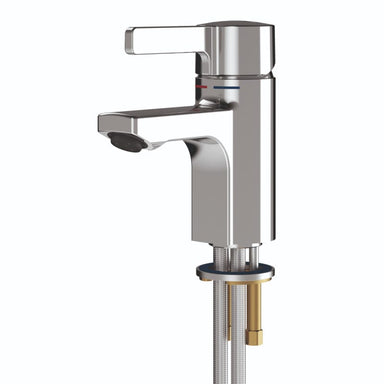
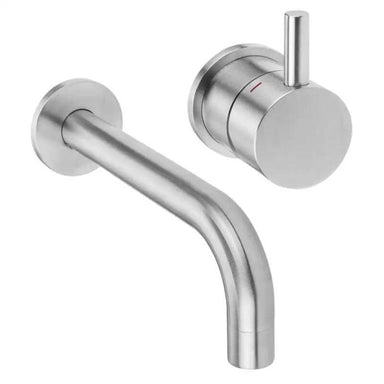
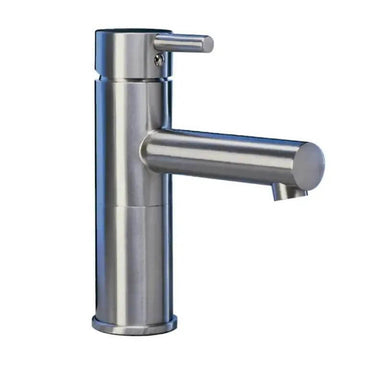
Commercial lever taps are built to withstand significantly heavier use than domestic fittings. Bodies are manufactured from solid brass with a chrome plated finish, internals use ceramic disc cartridges rated for high cycle counts, and the lever arms are designed to absorb the kind of repeated lateral force that would quickly loosen a cheaper fitting. The range of types is broader than most buyers expect: separate hot and cold pillar taps that fit standard deck holes, monobloc mixers that combine both controls in a single body, bib taps that fix to the wall behind the basin, and bridge mixers that link two pillar bodies across wider tap hole centres with a shared spout.
3 Inch and 6 Inch Lever Taps
Lever arm length is the most consequential specification decision for most commercial lever tap installations. The two standard sizes used in UK commercial washrooms are 3 inch (75mm) and 6 inch (150mm), and the choice is determined by the hygiene requirements of the environment.
A 3 inch lever tap is operated using the back of the hand or the wrist. There is no need to grip the fitting, which means hands that have just been washed stay clean when turning off the flow. This covers the large majority of commercial washroom applications: school toilet blocks, office washrooms, commercial kitchens, sports facilities and general public conveniences. Six inch lever taps provide a 150mm arm that can be operated using the forearm or elbow, so the user's hands make no contact with the tap at any point. This is the clinical standard. Six inch lever taps are specified under Health Building Note HBN 00-10 for hospitals, GP surgeries, dental practices, care homes and medical laboratories where hand hygiene directly affects patient safety.
Sequential Lever Taps
A sequential lever tap uses a single control to manage both flow rate and water temperature. Turning the lever from the off position increases the flow, and continuing in the same direction raises temperature progressively from cold through to the preset maximum. It is not possible to jump directly to a high temperature setting, which significantly reduces the risk of accidental scalding.
Sequential operation is the standard for schools, care homes and nurseries, and it is widely used in general public washrooms where the user group is mixed or unpredictable. Many thermostatic monobloc mixers operate on the sequential principle as standard, often with a TMV3 valve setting a safe ceiling on the maximum output temperature. Where separate pillar taps are installed rather than a mixer, a thermostatic mixing valve should be fitted inline to perform the same function.
Thermostatic Lever Taps and TMV Standards
Thermostatic lever taps incorporate a mixing valve that blends hot and cold water to a consistent output temperature before it reaches the spout. This protects users from scalding even when supply temperature or pressure fluctuates, which is common in buildings with multiple draw-off points running simultaneously. The two UK standards for thermostatic mixing valves are TMV2 and TMV3. TMV3 is the more stringent of the two and includes a fail-safe mechanism that shuts off flow if either the hot or cold supply fails, preventing delivery of water at an unsafe temperature.
TMV3 is required in high risk settings under HTM 04-01, Safe Water in Healthcare Premises, and is standard practice in hospitals, care homes, nurseries and special schools. TMV2 is appropriate for lower risk commercial installations such as offices, leisure centres and standard school washrooms. If you are unsure which standard applies to your project, confirm with your project engineer or building control authority before specifying.
Lever Taps for Schools
Lever taps have been the default choice for UK school washrooms for many years, and the reasons are practical rather than aesthetic. Younger users often lack the hand strength to operate cross head taps reliably when hands are wet. The lever action removes that barrier. In art rooms, science labs and workshops where pupils' hands are regularly covered in paint, clay or other materials, a lever tap also means the fitting itself does not get contaminated every time someone turns the water on.
For standard school toilet blocks and general washroom areas, 3 inch lever taps on wash basins are the correct specification. Sequential operation is recommended to prevent younger users from running water at a temperature that could cause burns. School medical rooms and nurses' stations fall under a different standard and typically require 6 inch lever taps compliant with HBN 00-10. All taps specified for school washroom refurbishments should be WRAS approved, and new installations should meet the thermostatic requirements set out in the relevant local authority or academy trust specification.
Lever Taps for Healthcare
In any healthcare environment, the tap is a point of potential cross contamination and must be specified to reduce that risk. The governing documents are HTM 04-01, which covers safe water in healthcare premises, and Health Building Note HBN 00-10, which sets out requirements for clinical hand wash facilities by room type. Together, these determine the tap design, thermostatic standard, lever length, material requirements and cleanability criteria for every clinical washroom category.
For most clinical hand wash basins, the specification calls for a 6 inch lever tap with an integral TMV3 thermostatic valve, WRAS approval and a design without unnecessary surface complexity that would trap bacteria or impede disinfection. High risk areas such as operating theatres, isolation rooms and endoscopy suites may additionally require a detachable spout that can be removed for sterilisation between uses. Brands with product ranges that meet the full scope of healthcare specification include Armitage Shanks, Delabie and Rada.
Frequently asked questions
What is a commercial lever tap?
A commercial lever tap is a tap built for public, institutional or workplace washrooms where ease of operation and durability matter more than decorative styling. The lever handle lets users control the flow by pushing or lifting rather than gripping and turning, making lever taps suitable for a wider range of users and environments. Commercial lever taps use chrome plated brass bodies and are available as pillar taps, monobloc mixers, bib taps and bridge mixers.
What is the difference between 3 inch and 6 inch lever taps?
The measurement is the length of the lever arm. A 3 inch (75mm) lever can be operated with the wrist or back of the hand, making it suitable for schools, commercial kitchens and general commercial washrooms. A 6 inch (150mm) lever can be operated with the forearm or elbow, so there is no hand contact with the tap at all. Six inch lever taps are the standard for clinical environments including hospitals, surgeries and care homes, specified under HBN 00-10.
What does sequential operation mean on a lever tap?
A sequential lever tap uses one lever to control both flow and temperature in one movement. Moving the lever from off increases flow, and continuing in the same direction raises temperature progressively from cold to hot. The user cannot jump directly to a high temperature, which reduces the risk of accidental scalding. Sequential taps are commonly specified in schools, care homes and any washroom where vulnerable users are present.
Do I need a TMV3 lever tap?
TMV3 is required in high risk environments including NHS facilities, care homes, nurseries and special schools under HTM 04-01. TMV3 lever taps blend hot and cold water to a preset safe temperature and include a fail-safe that cuts off flow if either supply fails. For lower risk commercial settings such as offices and standard school washrooms, TMV2 or a non-thermostatic lever tap with a separate inline TMV is normally sufficient. Confirm the required standard with your project engineer or building control team before ordering.
What does WRAS approved mean?
WRAS is the Water Regulations Advisory Scheme. A WRAS approved product has been independently tested to confirm it meets the Water Supply (Water Fittings) Regulations 1999, which apply throughout the UK. This means the product will not contaminate the water supply and will not waste water through leakage or poor design. WRAS approval is required under many commercial building contracts and is standard practice for public sector installations.
What is the difference between a lever basin tap and a lever bib tap?
A lever basin tap is deck mounted, fitting through a hole in the top surface of the basin. This is the most common type for commercial washroom installations. A lever bib tap is mounted to the wall behind the basin, which suits situations where the basin has no pre-drilled tap holes, where wall fixing offers a more secure installation, or where the project specification calls for wall mounting. Both types are available as separate hot and cold pillar taps or as single lever mixer versions.
What lever taps should I specify for school washrooms?
For school toilet blocks and general classroom washrooms, 3 inch lever taps on standard basins are the correct starting point. Sequential operation is recommended to prevent pupils from running water at temperatures that could cause scalding. School medical rooms fall under HBN 00-10 and typically require 6 inch lever taps. All taps should be WRAS approved and constructed from chrome plated brass. Confirm thermostatic requirements with the school's facilities manager or local authority specification document before ordering.
What lever taps are required for hospitals and clinical environments?
Healthcare lever taps must comply with HTM 04-01 and HBN 00-10. The specification for a clinical hand wash station typically requires 6 inch lever arms for elbow operation, an integral TMV3 thermostatic mixing valve, WRAS approval and construction without surfaces or recesses that would impede thorough cleaning. High risk clinical areas may also require a detachable spout for sterilisation. Armitage Shanks, Delabie and Rada are among the brands commonly specified for healthcare environments.