Accessible Wash Basins for Disabled Washrooms
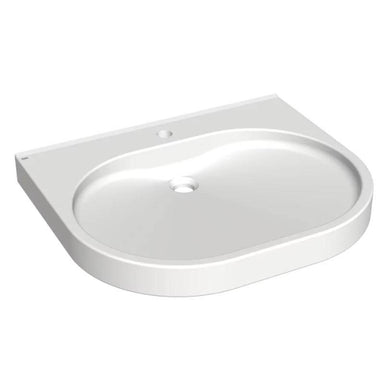
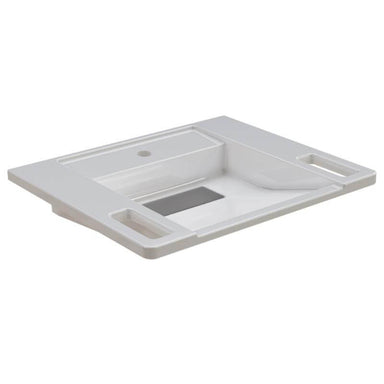
A disabled basin is not simply a standard wall hung basin installed lower. Accessible wash basins are designed specifically for the purpose and differ in height, profile and often in how the waste and trap are arranged. A standard basin sits at 800mm to 850mm from the finished floor to the rim and is designed for use by standing adults. An accessible basin is installed at 720mm to 740mm and must provide clear knee space underneath so a wheelchair user can pull close to the basin and wash their hands comfortably while seated.
The basins on this page are sold individually and suit replacement and refurbishment projects where an existing basin needs upgrading, or where products are being specified individually rather than as part of a complete set. If you are fitting a new accessible washroom from scratch, a Doc M pack includes a basin and tap as part of the full installation kit. For the complete range of accessible washroom products see our disabled washrooms collection.
What Makes a Basin Accessible
Installation height is where accessible basins differ most obviously from standard ones. Approved Document M specifies 720mm to 740mm from the finished floor to the top of the rim. A standard commercial basin goes in at 800mm to 850mm, which puts the bowl too high for a seated wheelchair user to reach without straining. At the lower height a wheelchair user can wash their hands comfortably, and a standing user can still use the basin without difficulty.
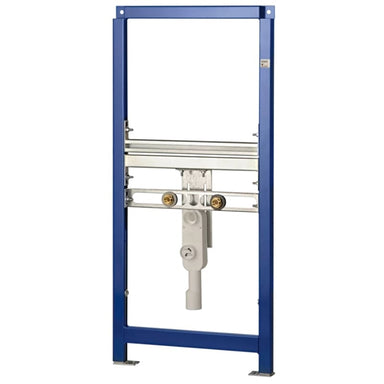
Knee clearance underneath the basin is equally important. There must be at least 700mm of clear height below the bowl to allow a wheelchair user to position their legs and footrest underneath. That clearance needs to extend at least 500mm back from the front of the basin. Bottle traps and exposed pipework eat into that space, which is why accessible basins are often specified with concealed waste arrangements that keep the area below the bowl fully clear.
Basin shape determines how close a wheelchair user can actually get to the water. A concave front profile curves inward at the front of the bowl rather than projecting outward. This stops the rim from obstructing the wheelchair footrest and allows the user to sit much closer to the basin, reducing reach and making everyday hand washing genuinely manageable from a seated position. A standard basin with a protruding or square front edge prevents this and effectively makes the basin harder to use regardless of how correctly it has been installed.
Tap and Supply Requirements
An accessible basin must be fitted with a lever action mixer tap or a sensor tap. Lever taps can be operated with one hand without any grip or rotation, which is essential for users with limited hand function, arthritis or upper limb conditions. Sensor taps remove the need to touch any control at all. Standard pillar taps and quarter turn ceramic disc taps both require grip and rotation to operate and are not acceptable in an accessible washroom.
A TMV3 thermostatic mixing valve in the supply pipework is strongly recommended. It controls outlet temperature and prevents scalding, which matters particularly for users with reduced sensation. The valve should be accessible for servicing without requiring the basin to be removed. If you are also specifying the WC pan and grab rails for the same room, see our accessible toilet pans and the full disabled washrooms collection for everything needed to complete the installation.
Specifying a Disabled Basin
Rim height needs to be confirmed before ordering. The product should be specified for installation at 720mm to 740mm from the finished floor, not the 800mm to 850mm height of a standard basin. Some manufacturers list standard and accessible versions of the same basin in the same range, so check the specification carefully to make sure you are ordering the accessible variant.
Underside clearance needs verifying against the product drawing, not just the product description. Check that at least 700mm of clear height remains below the installed basin once the waste outlet and trap are accounted for. If the product does not include a concealed waste arrangement, check that the trap you intend to use will fit within that clearance envelope before placing the order.
Basin width is worth considering too. Accessible basins typically run from 450mm to 600mm wide. A wider basin puts the tap further from the centre of reach, which makes it harder to operate from a wheelchair. A 500mm to 550mm basin is generally the most practical width for wheelchair accessible use.