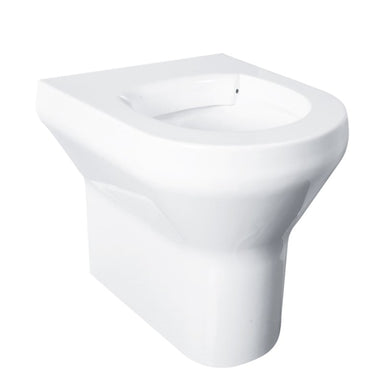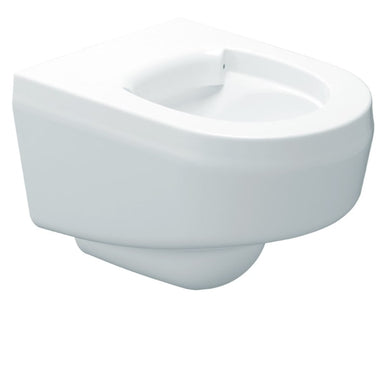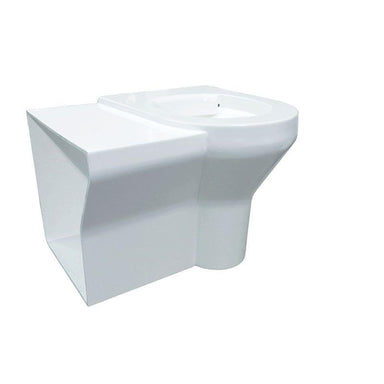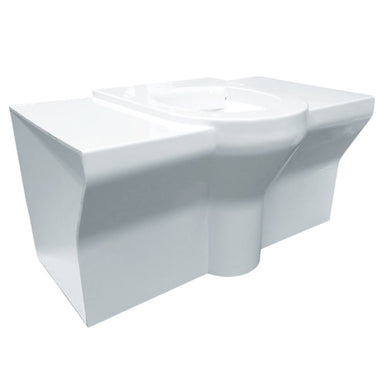

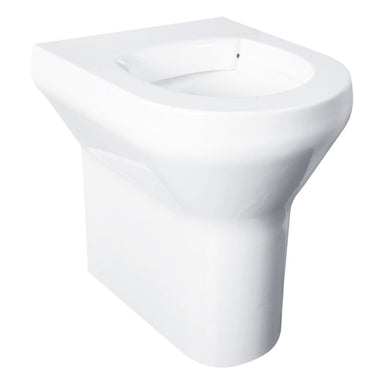
Anti Vandal Back To Wall WC Pan Offering a balance of durability and aesthetics, the KWC DVS Vandal Resistant Back To Wall WC Pan features a li...
View full detailsAnti ligature toilets, also known as anti ligature WC pans, ligature resistant toilets and safe ensuite WC pans, are designed to eliminate the flush controls, pipework and fixings that create a self harm risk in a standard washroom. Specified for mental health wards, psychiatric intensive care units, CAMHS inpatient facilities, secure children's homes and forensic units, these high security WC pans are available with wave on sensor flushing, recessed push button and pneumatic flush options. Free delivery on every order.
A standard commercial toilet presents multiple ligature risks that are not immediately obvious. The flush handle or lever is a projecting anchor point. An exposed cistern lid can be removed to access the internal fittings. The overflow outlet and fill valve inlet are anchor points. The gap between the back of the pan and the wall is a concealment space. Exposed fixing bolts beneath the pan provide anchor points at floor level. In a mental health environment with an assessed risk of self harm, every one of these features requires elimination or redesign.
Anti ligature WC pans address this through a fundamentally different design approach. The cistern is concealed within a sealed backplate or duct. The flush activation is recessed, sensor operated or pneumatic, with no projecting handle or button. All fixings are concealed behind the unit and fastened with tamper resistant security screws. The pan sits close to the wall with minimal gap. The result is a toilet that functions identically to a standard WC but presents none of the ligature risks associated with standard fittings.
The level of specification required varies by environment. A medium secure forensic unit may require a reduced ligature design where the most obvious risks are addressed. A psychiatric intensive care unit or high dependency setting requires the full anti ligature specification where every potential anchor point is eliminated. The risk assessment for the specific environment and patient group should determine which level of product is appropriate.
The flush mechanism is the highest risk component on a standard toilet in a mental health environment. A lever handle or pull chain is an obvious ligature point. Even a standard push button projects from the wall surface and creates an anchor. Anti ligature toilets address this through three main flush activation methods.
Wave on sensor flushing uses an infrared sensor built into the backplate that activates the flush on hand movement detection. There is no physical contact required with any fitting. The sensor housing is recessed flush with the backplate surface. This is the preferred option for high risk acute settings as it eliminates all physical interaction with the flush mechanism.
Recessed push button flushing uses a flush button that sits flush with or is set back into the backplate surface, giving nothing for a ligature to catch on. The button requires a direct push to activate and will not catch a looped material. This option suits medium risk environments where some physical interaction with the flush is acceptable.
Pneumatic flushing uses a concealed air operated mechanism triggered by a recessed pad or sensor. The pneumatic system eliminates electrical components at the point of activation and is suited to environments where electrical safety at the fitting level is a specification requirement.
Acute mental health wards and psychiatric intensive care units require the highest level of anti ligature specification. Every fitting in a patient bedroom and ensuite is assessed and the toilet is specified as part of an integrated safe ensuite system covering the WC pan, basin, taps and all accessories.
CAMHS inpatient units and secure children's homes apply the same standard. Young people in inpatient mental health settings face equivalent risks to adults and the specification requirements are the same.
Low, medium and high secure forensic units require anti ligature specification throughout patient areas. Forensic settings combine mental health risk with the security requirements of a custodial environment, and products must address both.
Eating disorder units, substance misuse units and other specialist mental health facilities each have their own risk profiles but all require anti ligature specification in patient and resident bathrooms. Prison healthcare wings and in-patient units within custodial settings require anti ligature specification in clinical areas, distinct from the standard high security or vandal resistant specification used in the general estate.
For a complete anti ligature washroom specification, our range also covers anti ligature basins and anti ligature taps. For the full range of products across all anti ligature categories, see our anti ligature washroom products collection.
Sale
Anti Vandal Back To Wall WC Pan Offering a balance of durability and aesthetics, the KWC DVS Vandal Resistant Back To Wall WC Pan features a li...
View full details
Sale
Anti Vandal Accessible WC Pan Combining accessibility with high security, the KWC DVS Vandal Resistant Accessible WC Pan f...
View full details
Sale
Anti Vandal Hung WC Pan The KWC DVS Vandal Resistant Wall Hung WC Pan delivers exceptional durability and security, crafte...
View full details
Save £-860.00
Anti Vandal Corner Fit WC Pan The KWC DVS Corner Fit WC Pan - Vandal Resistant combines superior strength and safety, utilizing ballistic-inspi...
View full details
Save £-1,076.00
Anti Vandal Enclosed Fit WC Pan The vandal resistant enclosed fit wc pan from kwc dvs is engineered for high security environments, offering un...
View full details