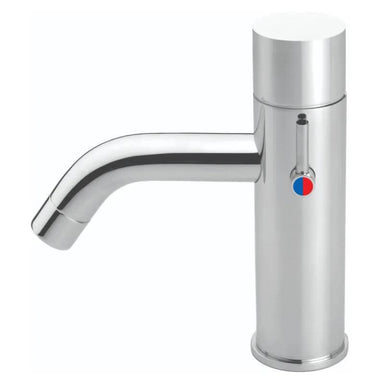
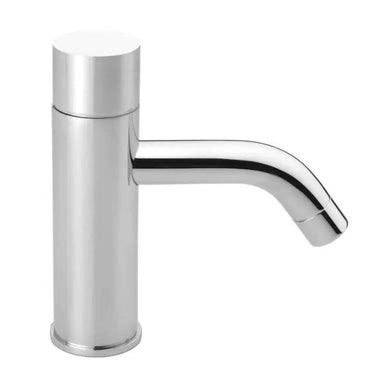
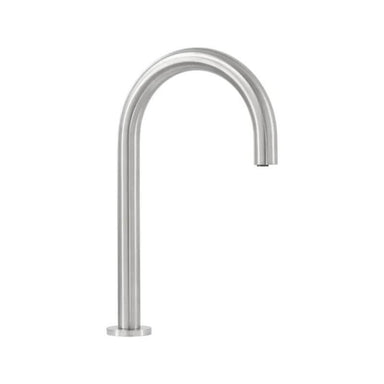
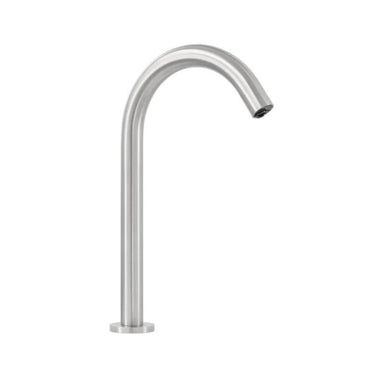
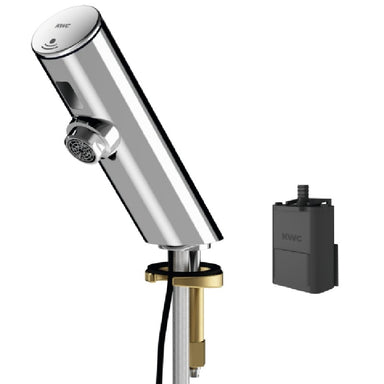
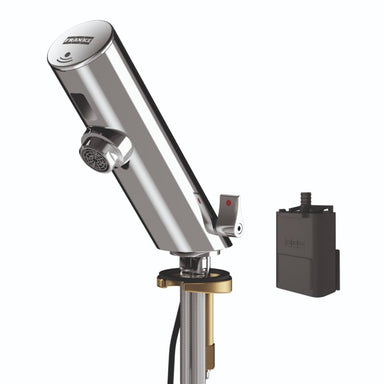
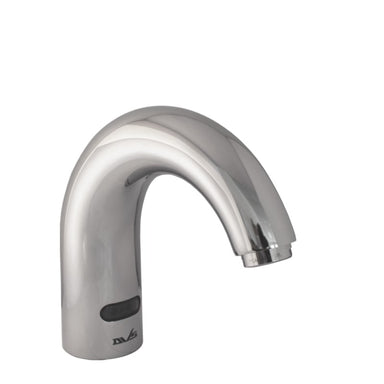
What Are Sensor Taps?
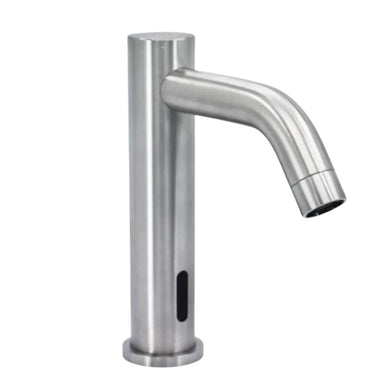
Sensor taps, also known as automatic taps or infrared taps, use a low voltage infrared beam to detect hand movement at the basin. When the beam is interrupted, a solenoid valve opens and water flows. When hands are removed, the valve closes and water stops. The entire cycle is automatic. There is nothing for the user to touch. This makes sensor taps the most hygienic option for any commercial washroom, removing the single most contaminated touch point in the room.
Most sensor taps run from either a battery pack housed beneath the basin or a mains transformer connected to a dedicated spur. Battery powered models need no electrical first fix, which makes them the straightforward choice for retrofit projects or where running a cable is not practical. Mains powered models are the better specification for new builds and planned refurbishments where the electrical supply can be factored in during first fix.
Where Are Sensor Taps Used?
In healthcare settings including hospitals, GP surgeries, dental practices and care homes, touchless operation is essential. At the point of handwashing, any contact with a tap surface is a contamination risk. Sensor taps remove that risk entirely and are standard in clinical and infection controlled environments.
In education, sensor taps address two practical problems at once: they prevent water waste from taps left running, and their lack of moving parts reduces vandalism and wear significantly compared to lever or push alternatives.
In offices, hotels and restaurants, sensor taps are increasingly standard, for hygiene and because they signal a level of care to the people using the facilities.
In high footfall public washrooms such as airports, transport hubs, stadiums and leisure centres, durability and low maintenance are the primary drivers. Sensor taps have no handle or lever to break, and the solenoid valve mechanism is straightforward to service. Sensor taps are also commonly specified for Doc M accessible washrooms, where ease of operation for users with limited dexterity or mobility is a requirement.
Frequently asked questions
How do sensor taps work?
An infrared beam is emitted from a sensor in the spout or body of the tap. When hands interrupt the beam, a signal opens the solenoid valve and water flows. When hands are removed, the beam closes the valve and water stops. Power comes from either a battery pack or a mains transformer, both delivering the low voltage needed to operate the solenoid.
Battery or mains powered: which should I specify?
Battery powered sensor taps need no electrical connection, making them the practical choice for retrofit installations or any project where running a spur is not viable. Mains powered taps connect to a dedicated electrical spur and are better suited to new builds and planned refurbishments where the supply can be installed during first fix. Some models support both options.
Wall mounted or deck mounted: which do I need?
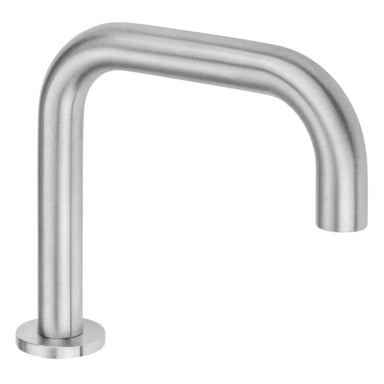
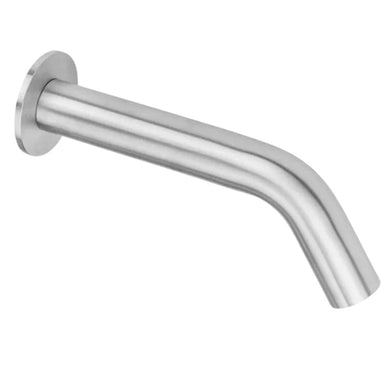
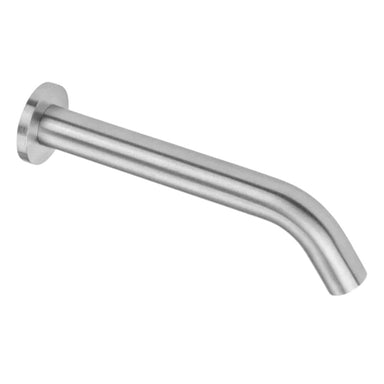
Wall mounted sensor taps fix above the basin to the back wall, keeping the basin surface completely clear. They suit wall hung basins and wash troughs where the wall behind is accessible. Deck mounted sensor taps mount directly onto the basin or countertop and suit basins with pre cut tap holes. The decision is driven by basin type and available plumbing access.
Are sensor taps WRAS approved?
WRAS approval confirms that a product meets the Water Supply (Water Fittings) Regulations. It is not a legal requirement but is commonly specified on commercial projects in healthcare and education. Several sensor taps in our range carry WRAS approval. Check individual product listings for certification details.
How much water do sensor taps save?
Sensor taps typically reduce water consumption by 30 to 50 percent versus manually operated taps. Two things drive the saving: flow rates on sensor tap models are generally lower than standard taps, and the automatic shutoff means water never runs unnecessarily. In a busy commercial washroom that adds up quickly.